How water raises the political temperature between countries
You've had some introduction to the A2 course by now. Below is a part of an article which relates directly to Unit 3 Water Conflicts.
It's well worth reading to prepare yourself.
Fifteen years ago Ismail Serageldin, an Egyptian who was vice-president of the World Bank, shook politicians by predicting that the wars of the 21st century would be fought not over oil or land, but water.
So far he has been proved wrong, but escalating demand for water to grow food and provide drinking water for burgeoning urban populations has raised political tensions between many countries.
To see the whole article click the heading at the top of this post.

Tuesday, 29 June 2010
Sunday, 23 May 2010
If you're stuck and not sure how to revise.....
....try some of these ideas:
Flashcards: On small cards, summarise a case study into one (or both) sides of the cards and refer to it regularly. Make sure that you include key facts and number as you condense the case study to fit the card.
Colour coding: colour code large pieces of text into sections. For example, it could be the social, economic and environmental impacts of the Cardiff Bay redevelopment
Memory tests: You could look at an important diagram (erg the cross section of a meander) for 20 seconds, then cover it over and draw what you remember. Then give yourself another 20 seconds to see what you missed and add it in. Eventually, you will be able to draw the sketch without looking at a copy.
Key words test: You could ask someone to read out 10 definitions and you have to say what the key word is. Then you could try it the other way around which is harder with someone giving you a key word to define.
Spider diagrams (mind maps): Write a key theme in the centre of an A3 piece of paper. Write the sub-themes around it with important ideas and case studies to back them up. Stick your finished spider diagram somewhere visible where you will be able to refer to it often (e.g. fridge door, bedroom wall).
Practice exam questions: Look at the examples of past case study questions. Practice writing responses to these questions using the flashcards or colour coded case studies you have created. There are some past papers and mark schemes under the Year 11 panel on the left hand side of the blog.
Summarising: Condense a section of text into a set number of bullet points.
Reading aloud: Read a case study summary aloud, then try to say aloud all the facts and figures you remember without the summary. You could also read your keyword lists aloud.
Repeated writing: Copy out pieces of information more than one time (five times would be appropriate). The repetition will help you to fix the facts in your memory, which is obviously important with case studies.
Look at the STUDY SKILLS section on the left hand side panel for more ideas and search for "mind maps" to see some examples.
Flashcards: On small cards, summarise a case study into one (or both) sides of the cards and refer to it regularly. Make sure that you include key facts and number as you condense the case study to fit the card.
Colour coding: colour code large pieces of text into sections. For example, it could be the social, economic and environmental impacts of the Cardiff Bay redevelopment
Memory tests: You could look at an important diagram (erg the cross section of a meander) for 20 seconds, then cover it over and draw what you remember. Then give yourself another 20 seconds to see what you missed and add it in. Eventually, you will be able to draw the sketch without looking at a copy.
Key words test: You could ask someone to read out 10 definitions and you have to say what the key word is. Then you could try it the other way around which is harder with someone giving you a key word to define.
Spider diagrams (mind maps): Write a key theme in the centre of an A3 piece of paper. Write the sub-themes around it with important ideas and case studies to back them up. Stick your finished spider diagram somewhere visible where you will be able to refer to it often (e.g. fridge door, bedroom wall).
Practice exam questions: Look at the examples of past case study questions. Practice writing responses to these questions using the flashcards or colour coded case studies you have created. There are some past papers and mark schemes under the Year 11 panel on the left hand side of the blog.
Summarising: Condense a section of text into a set number of bullet points.
Reading aloud: Read a case study summary aloud, then try to say aloud all the facts and figures you remember without the summary. You could also read your keyword lists aloud.
Repeated writing: Copy out pieces of information more than one time (five times would be appropriate). The repetition will help you to fix the facts in your memory, which is obviously important with case studies.
Look at the STUDY SKILLS section on the left hand side panel for more ideas and search for "mind maps" to see some examples.

Year 9 - Titles for your investigation
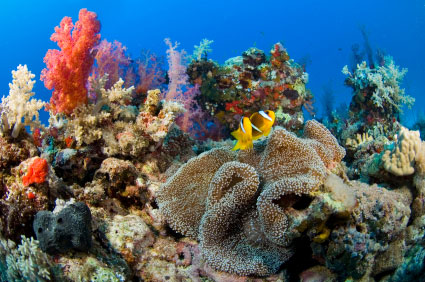 Year 9 students will be starting an investigation soon. You should choose a title from the following 6 options and conduct research on it. You will be given a booklet with some tips and hints. Inside the booklet are some web links to get you started, but you need to conduct your own research and use the research diary to keep a record of all the different websites, nespapers, books, magazines and DVDs that you use to gather information. Make sure your research helps you answer the key questions that are listed in the booklet. You are aiming to write 800 words.
The titles for you to choose from are:
1. How is global climate change affecting coral reefs?
OR
2. How can we sustainably develop an area of tropical rainforest?
 Sport
Sport3. London 2012: What venues have been chosen and why?
OR 4. What are the impacts of skiing and snowboarding on a chosen mountainous area?
Tourism
5. How can UK seaside resorts attract tourists?
OR
6. What is the effect of increased visitor numbers on the Himalayas?
Wednesday, 19 May 2010
Year 10 Controlled Assessment
All Year 10 students are currently undertaking their controlled assessment - writing 1200 words on the question "How and why do coastal features vary along the Dorset coast"
It is vital that you attend all lessons.
There are support materials for you to look at further down the blog, on the left hand side.
Revise thoroughly before each lesson as you will not be allowed to get help from your teacher during the exam conditions. Make sure you know what the answers are, what you have to do and how to do it. Ask your teacher for help outside the exam conditions.
If you miss a lesson you will have to come back Thursday after school to catch up. This is in L13 and will go from 3.40 to 4.40pm.
It is vital that you attend all lessons.
There are support materials for you to look at further down the blog, on the left hand side.
Revise thoroughly before each lesson as you will not be allowed to get help from your teacher during the exam conditions. Make sure you know what the answers are, what you have to do and how to do it. Ask your teacher for help outside the exam conditions.
If you miss a lesson you will have to come back Thursday after school to catch up. This is in L13 and will go from 3.40 to 4.40pm.
Gulf oil now in powerful Loop Current, scientists say

The first oil from the Gulf of Mexico spill has entered an ocean current that could take it to Florida and up the east coast of the US, scientists say.
The European Space Agency said satellite images suggested oil could reach the coral reefs of the Florida Keys within six days.
"We have visible proof that at least oil from the surface... has reached the current," said Dr Bertrand Chapron.
Meanwhile, the US said it was having talks with Cuba over the spill.
Observers say the talks demonstrate a concern that the oil may be carried by currents far from the site of the Deep Horizon disaster.
A BP executive said this week that the company had paid out $15m (£10.4m) in claims, much of it to shrimpers and commercial fishermen who have little or no income because of the spill.
Meanwhile, astronauts and cosmonauts aboard the International Space Station have said they could see the oil spill while passing over the Gulf of Mexico.
"It looks very scary," Russian cosmonaut Oleg Kotov told reporters via a video link.
Tuesday, 4 May 2010
Oil spill - USA
A massive oil leak in the Gulf of Mexico is slowly starting to reach the shore, according to reports.
Up to five thousand barrels a day are thought to be leaking from the site of the Deepwater Horizon rig which sank on 22 April after an explosion in which 11 workers lost their lives.
The delicate eco-system of the gulf coastline is rich in wildlife including the brown pelican, many species of duck, turtles, and whales.
There are fears that the disaster could reach the scale of the 11m gallon Exxon Valdez spill off Alaska in 1989.
Up to five thousand barrels a day are thought to be leaking from the site of the Deepwater Horizon rig which sank on 22 April after an explosion in which 11 workers lost their lives.
The delicate eco-system of the gulf coastline is rich in wildlife including the brown pelican, many species of duck, turtles, and whales.
There are fears that the disaster could reach the scale of the 11m gallon Exxon Valdez spill off Alaska in 1989.
Sunday, 18 April 2010
Volcanic Ash from Iceland continues to cause disruption
 The UK is enduring a fourth day as a virtual no-fly zone, as the travel chaos caused by volcanic ash drifting from Iceland shows no sign of ending.
Flight restrictions have been extended until at least 7pm and forecasters say the ash cloud could remain over the UK for several more days.
BBC business editor Robert Peston said the disruption risked becoming a "major business and economic disaster".
He said a number of European airlines were facing financial difficulties.
Our correspondent said: "If [the disruption] goes on many days longer, a number of European airlines will run into financial difficulties and may need bailing out by governments - or so I am told by senior airline figures."
On Friday, the International Air Transport Association (IATA) warned airlines would lose at least $200m (£130m) per day in revenues during the disruption.
Meanwhile, Dutch airline KLM and German airline Lufthansa have carried out test flights in their countries' airspace to see if it is safe for planes to fly.
KLM said its aircraft had been able to fly at its normal operating altitude of 13km (8 miles) over Dutch skies and no problems had been reported. The plane's engines were being inspected for possible damage, with a view to getting permission from the aviation authorities to start up operations again.
The disruption has affected hundreds of thousands of travellers since Wednesday, when the Eyjafjallajoekull volcano began erupting.
Among those affected were British wedding guests who had to watch on an internet connection as a bride and groom stranded in Dubai took their vows.
Link to live webcam of the volcano
In the shadow of the volcano
Year 9 and 10 exams coming up!
Year 9 exam - on the theme of Sustainable development
This link may be of some use (although it is all about Northern Ireland) : http://www.bbc.co.uk/northernireland/schools/11_16/ks3geography/swf/index.shtml
There is more information about Sustainabke development, including a short video clip, further down the blog.
Year 10 exam - a decision making paper on the theme of coastal processes and management
This link may be of some use: http://www.bbc.co.uk/schools/gcsebitesize/geography/coastal/
This link may be of some use (although it is all about Northern Ireland) : http://www.bbc.co.uk/northernireland/schools/11_16/ks3geography/swf/index.shtml
There is more information about Sustainabke development, including a short video clip, further down the blog.
Year 10 exam - a decision making paper on the theme of coastal processes and management
This link may be of some use: http://www.bbc.co.uk/schools/gcsebitesize/geography/coastal/
Subscribe to:
Posts (Atom)
