Saturday, 24 September 2011

Pakistan Floods

At least 369 people have died and 700,000 are living in refugee camps because of flooding in southern Pakistan, the country's national disaster authority said Thursday.

The flooding in Sindh province has destroyed 1.5 million homes in 41,000 villages, the government said. About 8.2 million people have been affected. Along with the deaths, more than 740 people have been injured.
About 67 percent of food stocks have been destroyed and nearly 37 percent of the livestock has been lost "or sold to avoid loss," Elisabeth Byrs, spokeswoman for the U.N. Office for the Coordination of Humanitarian Affairs, said earlier this week.
"At least 5 million surviving animals are at risk, lacking feed and shelter and facing increased exposure to debilitating diseases and worm infestations," Byrs said.
The United Nations' World Food Programme has been distributing food to thousands of people.
More than 6,000 schools have been damaged by the floods and 1,363 education facilities are currently being used as relief distribution sites in Sindh, officials said.


Click on the title to be taken to more details and some video footage from the Telegraph.
Click on the photo to be be taken to more images of the flood.

Thursday, 21 July 2011

Food security in the news - again

The famine in Somalia and East Africa has been in the news and situation looks pretty dire. If you're in Year 13 and studying "Life on the margins" for unit 4 then you need to keep up to date with what is happening - there's plenty of information out there. What you may not be aware of is Oxfam's "GROW" campaign. Click on the title to be taken to their website where they explain the cause of hunger around the world and you can sign up to do your bit to help as well

Saturday, 9 July 2011

The Guardian online - Global Development Section

This section of The Guardian on-line newspaper is an excellent resources for all pupils, particularly A-level students. Have a look around it and save the site to your favourites as it will keep you informed of the latest news in terms of World Development. It has case studies of countries and how they're doing in terms of Millennium Development Goals, lots of data that can be searched and graphics to look at and plenty of videos and podcasts to watch and listen (click on image or title to be taken to the site)
.

Rising food prices affects the poor- useful for Year 13, Unit 4

A report in June 2011 showed that the poor of the world are being affected much more seriously by rising food costs than any other group. Women appear to be harder hit then men as well.

The report says the world is being divided into "losers" and "winners":
"The losers – those already struggling in low-paid, informal sector occupations such as petty trading, street vending, casual construction work, sex work, laundry, portering and transport – are clearly worse off than last year."

Click on the title for further information and look at the links on that webpage for more about food price increases and the effects on people

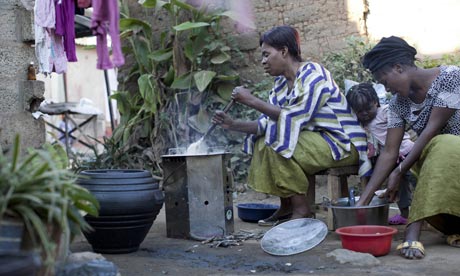
Click on the photo to be taken to a graph and data about the rising costs of food around the world.

South Sudan becomes world's newest nation

South Sudan gained independence from Sudan on 9 July 2011 as the outcome of a 2005 peace deal that ended Africa's longest-running civil war.

An overwhelming majority of South Sudanese voted in a January 2011 referendum to secede and become Africa's first new country since Eritrea split from Ethiopia in 1993.

Click on the headline to be taken to the BBC web-profile of South Sudan.

Monday, 14 March 2011

Year 12 Cornwall trip, March 21st-24th

Here is some information for you in preparation for next weeks trip

What to take:
You will be provided with breakfast and dinner each day but you will need to make your own provision for lunch. This means you should bring enough money with you for lunch each day. Obviously you can bring snacks and things to bolster your lunches!

You will be provided with bedding at the hostel but need to bring a towel.
You should bring toiletries and sensible clothing. This means if you have waterproofs then bring them, walking boots and wellies if you plan to get into water.The weather can be changeable so you need to be prepared for rain, wind and sunshine! Layers of clothing is the best idea, so you can add/remove depending on the weather.

You may wish to bring some things to keep you entertained, but avoid bring expensive equipment (anything you do bring is brought at your own risk). There is a room with a TV in it and, I think, a DVD player. You can bring a film if you wish, but to be honest there won't be lots of spare time - there's a lot of work to cram in, both during the day and the evening!

Itinery for the trip:
Monday:
Arrive at school for 7.45am at the very latest. The coach will depart at 8.00am - do not be late.
We will stop for a break/lunch on the way and aim to be in Padstow for about 2pm. You will then have an hour to look around Padstow and do some of the tasks you will find in the booklet you are provided with.
We will then head onto the youth hostel at Treyarnon Bay where after settling in you will walk to the nearby beach at Constantine in order to do some measurements.
After the evening meal you will be do some preparation work for Tuesday.

Tuesday:
After breakfast you will go back to Constantine Bay to meet a beach ranger who will talk to you about the management of the area and the sand dunes. You will also take some measurements. This will take till about 10.30am when we return to the hostel to change and then head out for Watergate Bay. At Watergate Bay you will do some tasks from the booklet. Those who wish to surf will have their lesson at about 1pm and then afterwards you will all meet the manager and managing director of the Extreme Sports Academy to see how they have helped with the rebranding of the area.
After all the tasks are completed you will then head for St Austell for a game of bowling and then back to the hostel for evening meal. After dinner you will do some more preparation and answer an exam question!

Wednesday:
Leave for the Eden project after breakfast at about 9.30am. We are booked in for a talk about the impact of the Eden project on the rebranding process in Cornwall at 12.30pm for an hour. You will have some time before the talk and after to explore Eden.
We will leave Eden between 2-3pm and head for Carlyon Bay where at 4pm you will meet a representative from CEG, the company involved in the development of "The Beach" project. Then at 5pm you will meet a panel of local people from the pressure group Carlyon Bay Watch, to hear what their objections to the plans are.
An evening meal is booked for 6.15 at an Indian restuarant. You will need to pre-order your meal, so your teacher should ask you to choose a main from the menu! After the meal you'll head back to the hostel.

Thursday:
After breakfast you will answer an exam question or two before getting the coach home at about 10.00am. We should be back in Kenilworth around 3.30. There will be a lunch stop on the way.

You will all be fit and well and ready for school on Friday!

Hopefully this answers any questions you have. If you are still unsure of anything then ask your teacher. If you are surfing you MUST have paid your £20 before the day of the trip. I need to give the surfing man definite numbers, so don't think you can oull out on the day!

Apologies to my class for my continued absence. It's not out of choice. Once I have been fixed I shall be back in school, probably after Easter.

I hope you all have a great time on the trip and I wish I was going along as well.

Mr Bains

Wednesday, 9 February 2011

China as a Superpower TV programme on BBC iplayer

Year 13 should definitely watch this programme as it ties in perfectly with the Unit 3 option on Superpower Geographies.

The BBC blurb reads:
Travelling across three continents, Justin Rowlatt investigates the spread of Chinese influence around the planet and asks what the world will be like if China overtakes America as the world's economic superpower. In the first of two films, he embarks on a journey across Southern Africa to chart the extraordinary phenomenon of Chinese migration to Africa, and the huge influence of China on the development of the continent.
While many in the West view Africa as a land of poverty, to the Chinese it is seen as an almost limitless business opportunity. From Angola to Tanzania, Justin meets the fearless Chinese entrepreneurs who have travelled thousands of miles to set up businesses


Click the heading to be taken to the show (it is the first episode in a series)

Monday, 24 January 2011

Year 13 - LIfe on the margins (unit 4)

The Foresight group published a report today about food and farming. It may well be looking at bits of it (the executive summary is a sensible starting point). If there's some useful bits in there (maybe a simple quote to add to your exam answer?) it will look good to the examiner as it so current.

Foresight Report (published 24th Jan 2011)

Guardian article on the Foresight report

Telegraph article about the report and warning of food price rises/GM crops

AS level Cornwall Fieldtrip, March 2009

Rebranding Cornwall - Year 12 fieldtrip

Year 10 trip to Swanage, Dorset (June 2010)

What's your travel IQ?


This Traveler IQ challenge compares your geographical knowledge against the Web's First Travel Blog's other 4,605,907 travelers who have taken this challenge as of Saturday, October 03, 2009 at 07:25PM GMT. (TravelPod is a member of the TripAdvisor Media Network) 

Hurricane Katrina, August 2005

Listen to an interview with the designer of the floating house.

What is Sustainable development?


Eco Schools!

You may or may not be aware that the government would like all schools to be sustainable by the year 2020 (see the video on sustainability above. There is another video below about practical things we can do to reduce climate change)

You can find out being sustainble means for schools by clicking on this link.

So....what is a sustainable school?

A sustainable school prepares young people for a lifetime of sustainable living, through its teaching and its day-to-day practices. It is guided by a commitment to care:

• For ourselves (out health and well-being)
• For others (across cultures, distances and generations) and
• For the planet (both locally and globally

A Sustainable School puts a high value on the well-being of its pupils and the school environment. We aim to:

• Waste little and recycle, compost or donate anything surplus
• Support local suppliers where possible
• Perhaps collect rainwater for schools ground maintenance and
• Have a zero tolerance approach to litter, graffiti and bullying.
• Save electricity and gas
• Reduce water waste.
• Look at using renewable energy resources.

If making sure the school is sustainable and doing the best it can for the environment is something that interests you then you should join the school eco team. Speak to Mrs Whewell or Mrs Pointon (go to main reception to ask for them) or go to the next meeting of the Eco group

Labels

2011 (1) 2013 (1) 7 billion (1) A2 (12) africa (7) ageing population (6) AIDS (2) alberta (1) antarctica (1) Arctic (1) argentina (1) AS (5) AS level (2) asia (1) ban ki-moon (1) bangladesh (1) Bhopal (1) big freeze (1) bridging the development gap (2) british empire (1) calving (1) cancun (2) Census (1) child labour (1) chile (3) china (7) cholera (1) climate (1) climate change (19) coasts (2) cold (1) cold environments (4) colomendy (2) colonialism (1) conference (1) contested planet (1) controlled assessment (8) Copenhagen (10) coral (1) cornwall (4) crowded coasts (1) cumbria (2) cyclone (1) Deforestation (1) denmark (1) desert (1) development (5) development gap (1) Devon (1) disaster (3) disease (2) dorset (1) drought (2) earth summit (1) earthquake (12) ecological footprint (1) el salvador (1) energy (4) England (1) environment (3) environmental issues (5) exams (1) falkland islands (1) famine (2) FAO (1) farming (1) field trip (1) fieldtrip (8) flash flood (1) floods (12) food (6) food insecurity (2) food security (8) foresight report (1) GCSE (15) geographical investigation (2) Geography in the news (2) Ghana (1) global warming (11) globalisation (2) haiti (5) heatwave (1) HIV (1) homework (1) HS2 (2) hurricane (2) ice (2) iceberg (1) India (7) indicators of development (1) Indonesia (1) industrial pollution (1) industry (1) interactive map (1) investigation (1) Italy (1) katrina (1) Kenilworth (1) kenilworthgeog (1) Ketsana (1) key themes (1) LEDC (1) life on the margins (13) light pollution (1) local study (2) maldives (1) management (1) megi (2) migration (2) millenium development goals (4) mind map (2) monsoon (2) natural hazards (16) neo-colonialism (1) nepal (1) neworleans (1) nigeria (1) norfolk (5) OCR B (2) oil (3) oil spill (2) one child policy (1) oxfam (1) Pakistan (1) pension (2) Philippines (6) plate tectonics (6) podcast (1) pollution (3) pollution and human health (1) population (6) population growth (2) poverty (2) practice (1) pre-release (4) presentations (1) prosperity (1) Qatar (1) rebranding (1) renewable (1) resources (2) retake (1) revision (8) Rio+20 (1) river alyn (1) rivers (2) rooms (1) Russia (1) scotland (1) SDME (4) security (1) sheep (1) snow (2) south korea (1) South Sudan (1) summit (1) super typhoon (1) superpowers (5) tar sands (1) tax (1) tectonic (1) trade (2) transport (1) tropical storm (2) tsunami (2) tuvalu (1) Twitter (2) typhoon (3) uk (1) UN (1) unit 1 (1) unit 2 (1) unit 3 (11) unit 4 (14) unsustainable (1) USA (2) volcanic ash cloud (1) volcano (3) wales (1) water (2) water conflicts (2) weather (3) World at risk (3) world food day (1) world hunger (1) world map (1) WWF (1) year 10 (16) year 11 (11) Year 12 (11) Year 13 (25) year 7 (1) year 8 (4) year 9 (11) Yr 11 (1)

See Geography department uploads on Slideshare