China has experienced rapid economic growth over the past decade or so, but this is jeopardised by an ageing population. This link will take you to a short BBC video report about what is happening in China and the problems they could experience. In 20 years the number of Chinese aged 60+ will double, meaning there will be more retired people in China than the entire population of Western Europe.
What can be done about ageing population? Are there any solutions? Is an ageing population entirely negative, or can we find positives? Where else in the world do we see an ageing of the population and why is this happening?
Click here to read an in depth BBC report on China's ageing population from Sept 20th 2012.
More details on China's ageing population
The economic time bomb - China growing old before it can grow rich? May 2012

Showing posts with label year 9. Show all posts
Showing posts with label year 9. Show all posts
Wednesday, 26 September 2012
Saturday, 24 September 2011
Pakistan Floods
 At least 369 people have died and 700,000 are living in refugee camps because of flooding in southern Pakistan, the country's national disaster authority said Thursday.
The flooding in Sindh province has destroyed 1.5 million homes in 41,000 villages, the government said. About 8.2 million people have been affected. Along with the deaths, more than 740 people have been injured.
About 67 percent of food stocks have been destroyed and nearly 37 percent of the livestock has been lost "or sold to avoid loss," Elisabeth Byrs, spokeswoman for the U.N. Office for the Coordination of Humanitarian Affairs, said earlier this week."At least 5 million surviving animals are at risk, lacking feed and shelter and facing increased exposure to debilitating diseases and worm infestations," Byrs said.
The United Nations' World Food Programme has been distributing food to thousands of people.
More than 6,000 schools have been damaged by the floods and 1,363 education facilities are currently being used as relief distribution sites in Sindh, officials said.
Click on the title to be taken to more details and some video footage from the Telegraph.
Click on the photo to be be taken to more images of the flood.

Sunday, 5 September 2010
Welcome back
Welcome back to school. Hopefully you have had a good rest and are ready to start working again! The blog has had some new information put on it, but will constantly be changing, with the latest Geographical news and advice/tips on how to do well in your studies.
Year 9 will be faced with an entirely new approach to their lessons and should look at the tab at the top of the page for more information.
GCSE students can find out more about their course using the tab at the top of the page as well as looking along the left hand side of the blog. The same applies for A-level students.
There are a collection of podcasts available (see tab at top of page), though these are mainly aimed at A-level students.
If there is anything that you wish to see on the blog, please mention it to your teacher and we'll see what we can do.
Year 9 will be faced with an entirely new approach to their lessons and should look at the tab at the top of the page for more information.
GCSE students can find out more about their course using the tab at the top of the page as well as looking along the left hand side of the blog. The same applies for A-level students.
There are a collection of podcasts available (see tab at top of page), though these are mainly aimed at A-level students.
If there is anything that you wish to see on the blog, please mention it to your teacher and we'll see what we can do.
Sunday, 23 May 2010
Year 9 - Titles for your investigation
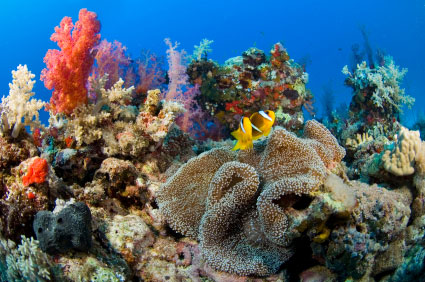 Year 9 students will be starting an investigation soon. You should choose a title from the following 6 options and conduct research on it. You will be given a booklet with some tips and hints. Inside the booklet are some web links to get you started, but you need to conduct your own research and use the research diary to keep a record of all the different websites, nespapers, books, magazines and DVDs that you use to gather information. Make sure your research helps you answer the key questions that are listed in the booklet. You are aiming to write 800 words.
The titles for you to choose from are:
1. How is global climate change affecting coral reefs?
OR
2. How can we sustainably develop an area of tropical rainforest?
 Sport
Sport3. London 2012: What venues have been chosen and why?
OR 4. What are the impacts of skiing and snowboarding on a chosen mountainous area?
Tourism
5. How can UK seaside resorts attract tourists?
OR
6. What is the effect of increased visitor numbers on the Himalayas?
Wednesday, 19 May 2010
Gulf oil now in powerful Loop Current, scientists say

The first oil from the Gulf of Mexico spill has entered an ocean current that could take it to Florida and up the east coast of the US, scientists say.
The European Space Agency said satellite images suggested oil could reach the coral reefs of the Florida Keys within six days.
"We have visible proof that at least oil from the surface... has reached the current," said Dr Bertrand Chapron.
Meanwhile, the US said it was having talks with Cuba over the spill.
Observers say the talks demonstrate a concern that the oil may be carried by currents far from the site of the Deep Horizon disaster.
A BP executive said this week that the company had paid out $15m (£10.4m) in claims, much of it to shrimpers and commercial fishermen who have little or no income because of the spill.
Meanwhile, astronauts and cosmonauts aboard the International Space Station have said they could see the oil spill while passing over the Gulf of Mexico.
"It looks very scary," Russian cosmonaut Oleg Kotov told reporters via a video link.
Tuesday, 4 May 2010
Oil spill - USA
A massive oil leak in the Gulf of Mexico is slowly starting to reach the shore, according to reports.
Up to five thousand barrels a day are thought to be leaking from the site of the Deepwater Horizon rig which sank on 22 April after an explosion in which 11 workers lost their lives.
The delicate eco-system of the gulf coastline is rich in wildlife including the brown pelican, many species of duck, turtles, and whales.
There are fears that the disaster could reach the scale of the 11m gallon Exxon Valdez spill off Alaska in 1989.
Up to five thousand barrels a day are thought to be leaking from the site of the Deepwater Horizon rig which sank on 22 April after an explosion in which 11 workers lost their lives.
The delicate eco-system of the gulf coastline is rich in wildlife including the brown pelican, many species of duck, turtles, and whales.
There are fears that the disaster could reach the scale of the 11m gallon Exxon Valdez spill off Alaska in 1989.
Sunday, 18 April 2010
Year 9 and 10 exams coming up!
Year 9 exam - on the theme of Sustainable development
This link may be of some use (although it is all about Northern Ireland) : http://www.bbc.co.uk/northernireland/schools/11_16/ks3geography/swf/index.shtml
There is more information about Sustainabke development, including a short video clip, further down the blog.
Year 10 exam - a decision making paper on the theme of coastal processes and management
This link may be of some use: http://www.bbc.co.uk/schools/gcsebitesize/geography/coastal/
This link may be of some use (although it is all about Northern Ireland) : http://www.bbc.co.uk/northernireland/schools/11_16/ks3geography/swf/index.shtml
There is more information about Sustainabke development, including a short video clip, further down the blog.
Year 10 exam - a decision making paper on the theme of coastal processes and management
This link may be of some use: http://www.bbc.co.uk/schools/gcsebitesize/geography/coastal/
Sunday, 1 November 2009
Interactive Atlas of the Millenium Development Goals

Have a look at this resource. It has been produced by the World Bank and shows how each country around the world fares against the Millenium Goals. This Online Atlas of the Millenium Development Goals takes each goal and resizes the world map to show the inequalities that currently exist.just click on one of the development goals on the right hand side of the screen, select a map and then resize it by clicking 'play'. The results are fascinating.
Thursday, 8 October 2009
For the attention of Year 9!
In your Geography lessons you should be working on, or about to work on presentations about your news stories. To make sure your group work is the best it can be you should try to make sure you do ALL of the following:
•Say what is the story about.
•Answer as many of the questions that you thought of as you can. Get the scrap book where the questions are written and find the answers through your research. Split the questions up so that for homework you all try to find answers for different aspects of the story.
•Relate the story to Geographical theories and ideas – for example Migration stories can be related to Push and Pull factors – ask your teacher and they will direct you to information.
•Try to cover differing viewpoints in your work (and don’t forget to include your own)
•Try to mention the idea of sustainability. This means whether something can keep going without doing damage.
If you include all of this then you are more likely to get a high grade for your work.
Remember, this work is also about teamwork. .You must learn how to work with others.....this means having good comminication skills, sharing the workload and cooperating!
What is teamwork??
•Say what is the story about.
•Answer as many of the questions that you thought of as you can. Get the scrap book where the questions are written and find the answers through your research. Split the questions up so that for homework you all try to find answers for different aspects of the story.
•Relate the story to Geographical theories and ideas – for example Migration stories can be related to Push and Pull factors – ask your teacher and they will direct you to information.
•Try to cover differing viewpoints in your work (and don’t forget to include your own)
•Try to mention the idea of sustainability. This means whether something can keep going without doing damage.
If you include all of this then you are more likely to get a high grade for your work.
Remember, this work is also about teamwork. .You must learn how to work with others.....this means having good comminication skills, sharing the workload and cooperating!
What is teamwork??
Saturday, 3 October 2009
International rescue teams arrive in Indonesia

Rescue teams from all over the world are arriving in the Indonesian island of Sumatra to help search for survivors of Wednesday's earthquake.
Workers arriving in remote areas three days after the quake are finding villages completely destroyed.
So far more than a thousand people are known to have died, but now that number is expected to rise.
British, Australian and South Korean rescuers have arrived and the EU and Russia are also sending help.
The city of Padang, which is very close to the coast, is among the areas hardest hit by the tremors. Up to 3,000 people are believed trapped beneath collapsed buildings.
Charities like the Red Cross say more help is needed.
"We need drinking water and clothes because many people's clothes were burnt in fires," said one Red Cross worker.
"We also need medicines to stop infection."
It's quite difficult for search and rescue teams to work their way through to the worst affected areas, so it's going to take a long time to help people.
The earthquake, which measured 7.6 on the richter scale, and a really strong aftershock brought down hospitals, schools and shopping centres as well as causing landslides across the island.
Workers arriving in remote areas three days after the quake are finding villages completely destroyed.
So far more than a thousand people are known to have died, but now that number is expected to rise.
British, Australian and South Korean rescuers have arrived and the EU and Russia are also sending help.
The city of Padang, which is very close to the coast, is among the areas hardest hit by the tremors. Up to 3,000 people are believed trapped beneath collapsed buildings.
Charities like the Red Cross say more help is needed.
"We need drinking water and clothes because many people's clothes were burnt in fires," said one Red Cross worker.
"We also need medicines to stop infection."
It's quite difficult for search and rescue teams to work their way through to the worst affected areas, so it's going to take a long time to help people.
The earthquake, which measured 7.6 on the richter scale, and a really strong aftershock brought down hospitals, schools and shopping centres as well as causing landslides across the island.
Click the title to go to an animated guide about earthquakes
Thursday, 1 October 2009
Indonesian Eartquake death toll reaches 1000
Latest reports this evening on the BBC News website state that at least 1,100 people have died in the earthquake that struck the Indonesian island of Sumatra on Wednesday, the UN humanitarian chief has said. John Holmes said many hundreds more were injured and both figures were set to rise further. Rescuers are working into the night to find survivors in the rubble of hundreds of collapsed buildings. The 7.6-magnitude quake struck close to the city of Padang, the capital of West Sumatra province. The earthquake brought down hospitals, schools and shopping malls, cut power lines and triggered landslides. For more reports, video and audio clips select: BBC News Indonesian earthquake reports
Indonesian Eartquake death toll reaches 1000

Latest reports this evening on the BBC News website state that at least 1,100 people have died in the earthquake that struck the Indonesian island of Sumatra on Wednesday, the UN humanitarian chief has said. John Holmes said many hundreds more were injured and both figures were set to rise further. Rescuers are working into the night to find survivors in the rubble of hundreds of collapsed buildings. The 7.6-magnitude quake struck close to the city of Padang, the capital of West Sumatra province. The earthquake brought down hospitals, schools and shopping malls, cut power lines and triggered landslides. For more reports, video and audio clips select: BBC News Indonesian earthquake reports
Subscribe to:
Posts (Atom)
